
Have you ever heard of a worm farm? Do you need ways to bring in extra income without adding to your already loaded plate. Do you have chickens that would love to eat some worms?
I recently read about worm farms and decided since earth worms are something I am OK handing, and my chickens love them, that I would give it a try. I had everything needed except the worms, so it would be a minimal expense to see if it was worth it.
How do you create a worm farm?
Keep in mind, Main Street Homestead is relatively new so I am sharing the methods here that I researched and used to get started. I will also share the changes I make to my original method as I learn more and more!
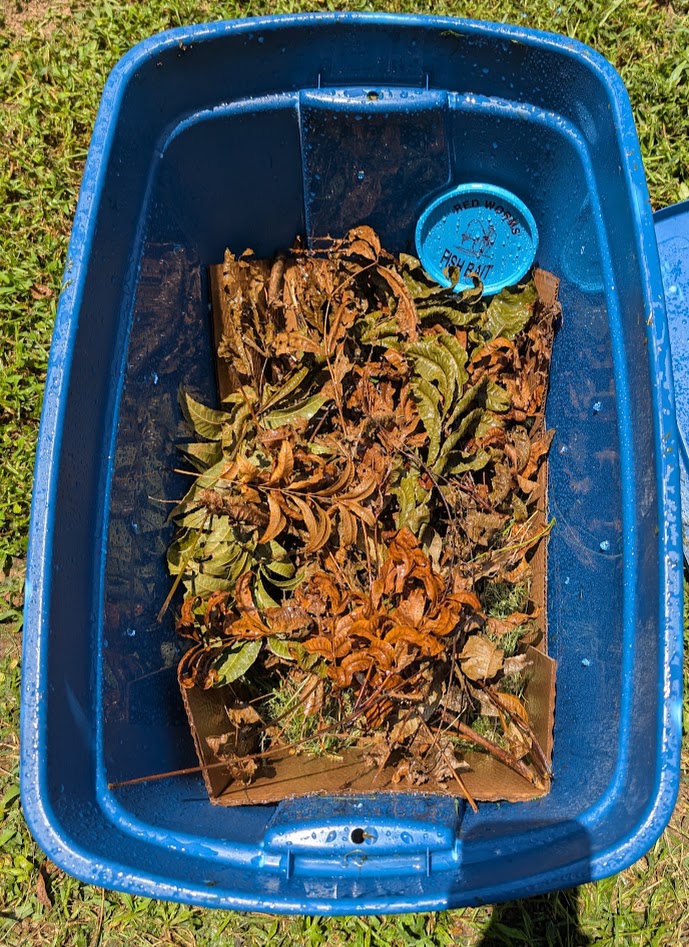
Creating a worm farm only requires a few things, some of which you may have lying around and not even realize it. Basically you need a container to put the worms in, you need some bedding, and some food. I used a tote, some dried leaves, sticks, cardboard, a drill, grass clippings, and worms. As I mentioned, I had everything on hand except the worms so I went to the gas station by my house and purchased 1 package of “red wigglers” for $5.44. I asked the lady at the counter how many worms were in the package, but she did not know. My estimate would be 50 or so.
So how do you make a worm farm? Well here are the 7 steps I used to make mine!
Step 1
Put some air holes in your tote. I did all sides, but not the lid.
Step 2
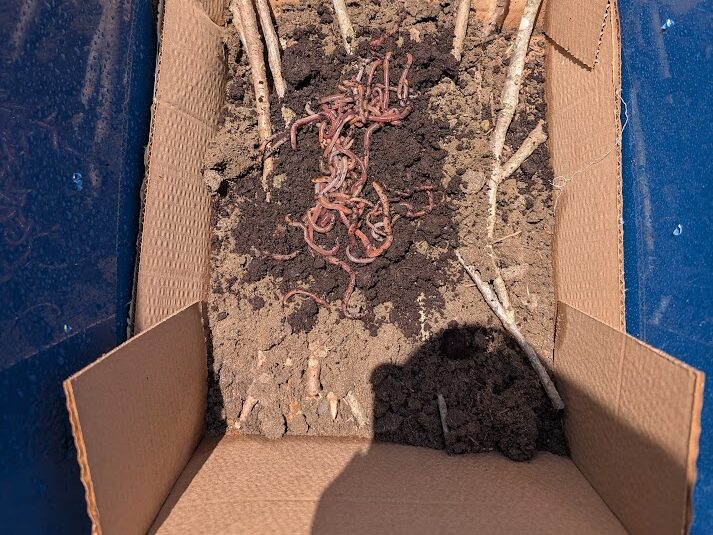
Line the tote with cardboard. You can use shredded or whole. I went with whole to get me started. The purpose of the cardboard is both good and drainage.
Step 3
Add some dirt or shredded paper. Something to create bedding.
Step 4
Add some grass clippings or something green (fine material). This is food! You can also add scrap food. Worms need vegetables, not fruit, and the smaller the better.
Step 5
WORMS!
Step 6
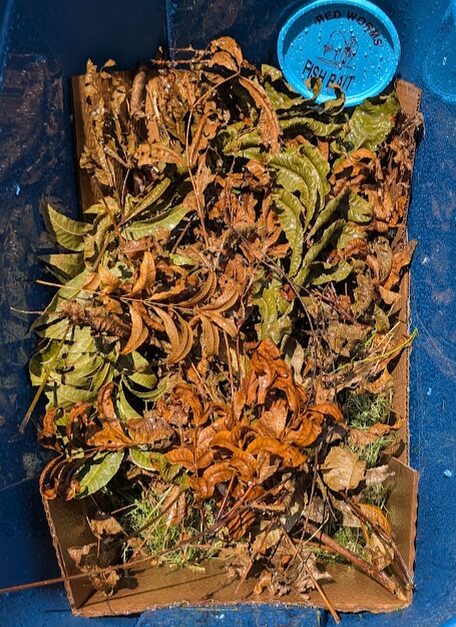
Finally, add some crushed up dead/dried leaves, or more cardboard shredding. This is referred to as “brown.” The purpose of this is to help retain moisture. The worms will also consume this as it decomposes.
Step 7 – Last step of building worm farm
Moisten, you want it wet, but not puddling.
Growth rate of worm farm
Apparently worms will multiply rather quickly. According to Uncle Jim’s Worm Farm, Red wigglers can double their population every 60 to 90 days when conditions are ideal. I am starting my worm farm in July, so by the time I am ready to use some castings inn my Fall garden around October, it should have doubled in size.
3 ways to make money from your worm farm
I am starting on a very small scale here – 1 tote – to bring you the information on what your potential might actually be. As I mentioned before, I started with 1 box of worms that I estimated to have about 50 worms. I will be cataloguing my experiences, costs, and revenues for this blog post.
There are a couple different ways to make some money from your worm farm. Again, this information is coming to you from an urban gardener on a very small scale to determine if it is profitable and worth scaling. Now, let’s not forget that one benefit of a worm farm is feeding your chickens. This can save money for you if you spend money on worms just for your chickens.
There are 3 main ways you can make money from your worm farm. Again I will document my experiences on which ways make me the most money as I go.
Worm castings
First and probably the most common, is worm castings, or poop! How much poop will $5 worth of worms make? TBD!
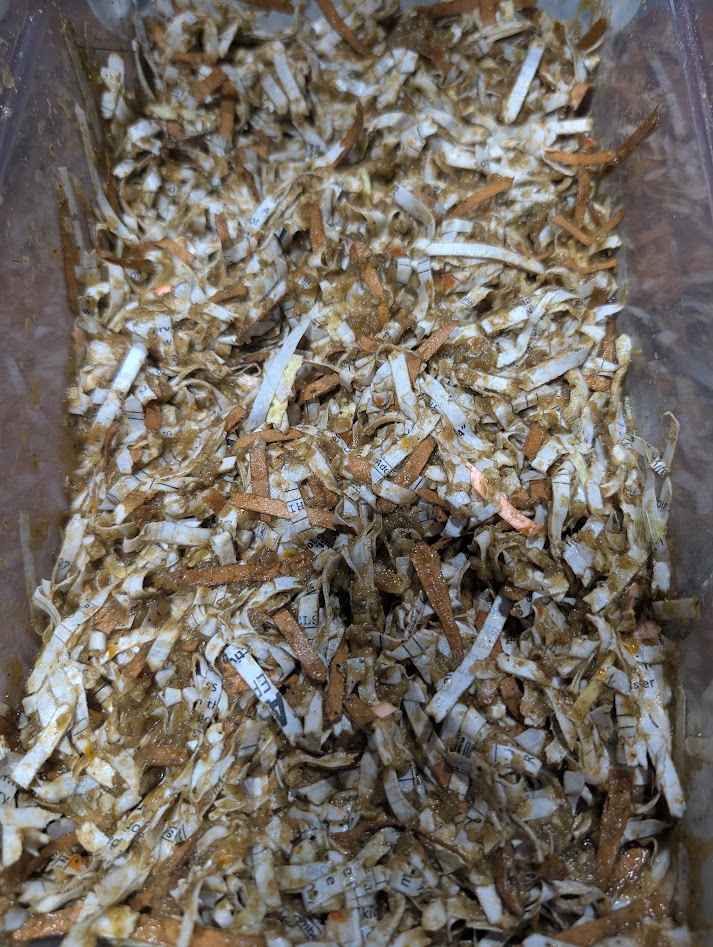
Since starting my worm bed I have done tons of research. What I have discovered is that you can “speed up” the process of getting castings. There is a very informative lady on YouTube called “Rockin Worms” and she has a few different bedding and composting methods. I am currently switching over to the method she calls “pre-compost” (I think thats what she calls it). Essentially, the food is mixed into the bedding so instead of having to feed your worms, they eat their way through the bedding making it almost a “set it and forget it” type set up.
Worm tea
Next is what is called “worm tea.” As of this post, I believe this product will be the most lucrative, but it remains to be seen. Worm tea is essentially “tea” brewed with worm poop. The important thing here is NO CHLORINE! Chlorine kills the very bacteria that you will be “brewing,” but essentially you get some water and some of those worm castings, add in a tad of molasses, and let it marinate! The end result is a liquid fertilizer that can be used in the garden or even on house plants!
Sell the worms
Lastly, you could sell the worms themselves. Of course they would have to multiply significantly before I felt like I had a surplus that I could sell. That might be more of a commercial operation rather than an urban gardener situation. TBD!
Research your area
I did do a little bit of research online to see if anyone in my immediate area was selling worm castings or worm tea. From what I can tell, they aren’t. I personally have a lot of friends who love houseplants, so this is another area that I will be marketing to.
Worm Farm Regulations
Always remember to check your state regulations and requirements!